

Dit blog is geschreven in het Engels, maar biedt de perfecte oplossing voor een regenachtige dag tijdens je verblijf. Zweden is prachtig, ook als de zon even niet schijnt! In dit artikel nemen we je mee op een indrukwekkende autoroute door Orsa Finnmark. Ontdek de mysterieuze geschiedenis van de Bosfinnen, bezoek een UNESCO Werelderfgoed boerderij en daal af in een oude kobaltmijn. Een avontuurlijke dagtocht die start vanaf onze boerderij en je meeneemt naar plekken waar de tijd lijkt te hebben stilgestaan. Plan je verblijf bij Näsets Marcusgård →
On a rainy day like today, it might be an idea to make a tour by car through Orsa Finnmark, an area north of Orsa. The name comes from Skog settlers, Finns who moved from Finland, then part of Sweden, in the late 16th and early 17th centuries. The villages in these Finnmark areas are sparsely populated and usually rather far apart. That you find unique spots in the middle of nowhere does make these kinds of areas all the more adventurous.
Why is it called Finnmark?
The area of Orsa Finnmark is steeped in history. The migration of Finns, who were experts in an ancient ‘Huhta’ woodworking practice, began when Duke Charles (later Charles IX) offered them tax-free years to settle in the forested lands of central Sweden. From there, some settlers moved to Norway, where they practised ‘Huhta’ farming. This method entailed cutting down spruce forests, allowing them to dry for a year or two, setting them on fire, and then using the ashes to grow rye and turnips. Such efficient farming yielded high harvests.
The Forest Finns also brought their building traditions with them. They built smokehouses, rias for drying the Swede rye, and smoke saunas. Both fire and smoke heated the buildings through smoke stoves. A Finn farm could consist of 15-20 houses and outbuildings, providing an incredible glimpse into the past.
Don’t miss out on the unique opportunity to explore Orsa Finnmark. Make your way through picturesque scenery and get a glimpse into the lives and history of the Skogs settlers.
Fågelsjö gammelgård
This text mentions some of the less difficult-to-find spots that are interesting to visit. We start with Fågelsjö, an example of Finnish culture: Fågelsjö gammelgård, also known as the Bortoma Åa farm, is one of the seven Hälsingland farms that were added to the UNESCO World Heritage List on July 1st, 2012. Step over the threshold of this impressive farm dating back to 17th-century forest Finnish colonisation, where everything has been preserved for several generations.
Step into the old gunsmith’s shop, the servant’s hut and the habre (storehouse) with the seven locks. Experience what life was like for a wealthy farming family. You will be amazed. Open till September the 10th.

Pilkalampinoppi
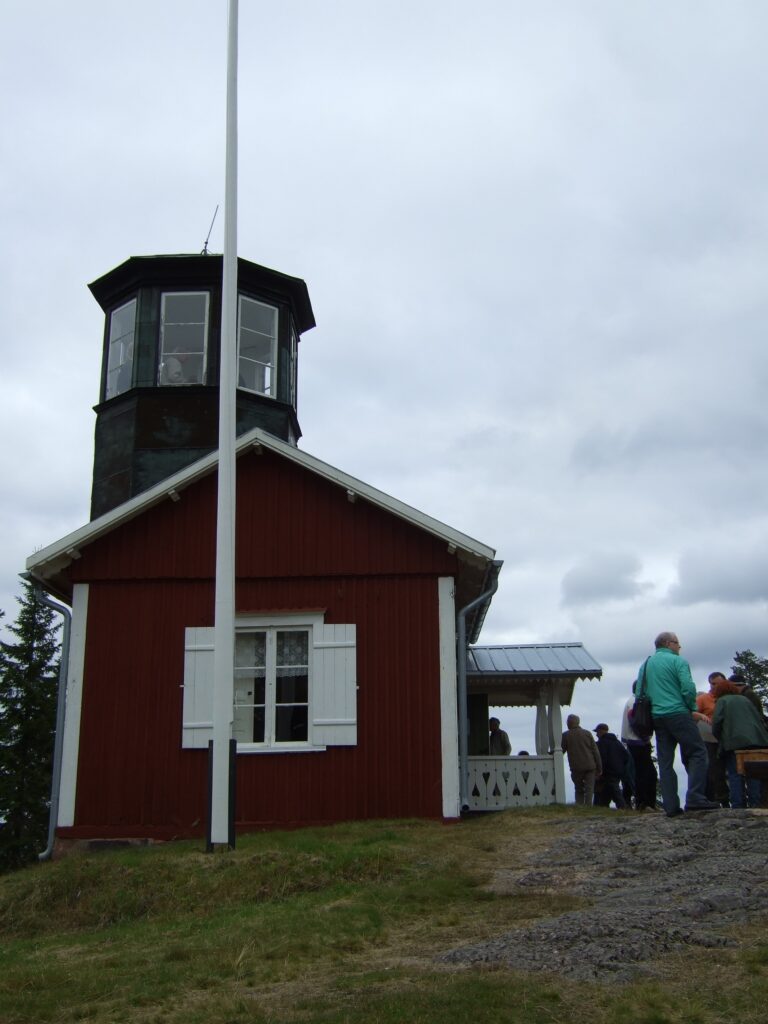
When discussing fire, we can roll on to a fire-related spot: Pilkalampinoppi, Sweden’s first fire tower.
The fire lookout tower was built in 1889, the year after the big fire at Nordkap that destroyed a forest area of 1900 hectares. The extent of the fire was partly due to the lack of easily accessible roads and partly because most of Orsa Besparingsskog is located in Hamra Chapel, i.e., in another parish and Gävleborg County. The county governor in Orsa did not want to order people to extinguish the fire as it was not within his area of responsibility; that was a task for the county governor in Los.
After the fire, Orsa Besparingsskog made a quick decision that they had to set up a practical fire watch over their massive forest holdings. As early as 1889, fire watch towers were erected at Pilkalampinoppi, Knoppen, Kvarnberg and the church tower in Hamra. At the same time, a primitive single-wire telephone line was built from Orsa via Fredshammar – Rosentorp up to Hamra, passing all the fire watch towers on the way to Hamra.
From 1890, these fire towers operated in the summer. In the Hamra church tower and at Pilkalampinoppi, maps with graduated discs were set up to determine fire areas by sighting from two directions and to start firefighting quickly. The fire tower at Pilkalampinoppi was Sweden’s first and was operated every summer until firefighting aircraft took over in the early 1950s.
Loos Koboltgruva
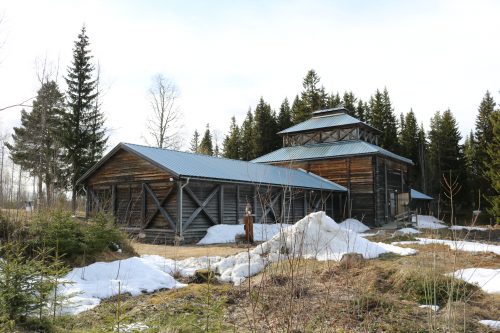
If it stops raining, you can walk in Hamra National Park, in the vast forest where the Finnish feel at home. If it didn’t stop raining, visit the Loos Koboltgruva, Loos cobalt mine, where you will find a genuine industrial experience from another century. The mine is in the middle of the village, where you can look back upon the industrial spirit of the 18th century. The mine is surrounded by an idyllic wilderness, offering a significant variation of bedrock and nature.
Several exhibitions, as well as a slideshow, can be viewed inside the mine. As you descend underground, you are led through the mine along wooden pathways and stairs, at the same time as you are taken back roughly 250 years in time. The atmosphere will bring to mind the history of the mine, the people who worked there, and their everyday life underground.
Stora Hälsingegårdars väg
From Loos, you drive to Alfta and have lunch or fika at the bakery ‘Linbageriet‘, Krangatan 18 in Alfta. Then take the ‘Stora Hälsingegårdars väg‘, the road with large Hälsingland farms to Edsbyn.
Follow the signs, brown with a white flower, between Alfta and Edsbyn. It winds through villages and areas with the largest Hälsingland farms, the grandest front gardens and interiors with lavish paintings. This road will undoubtedly surprise you all the way.

Do you love linen? Then, drive to Bollnäs and Växbo Lin, a true lin mecca that many Swedish lin lovers love. Near the factory, you’ll find a large factory shop.
Coffee at Dalfors Lanthandel
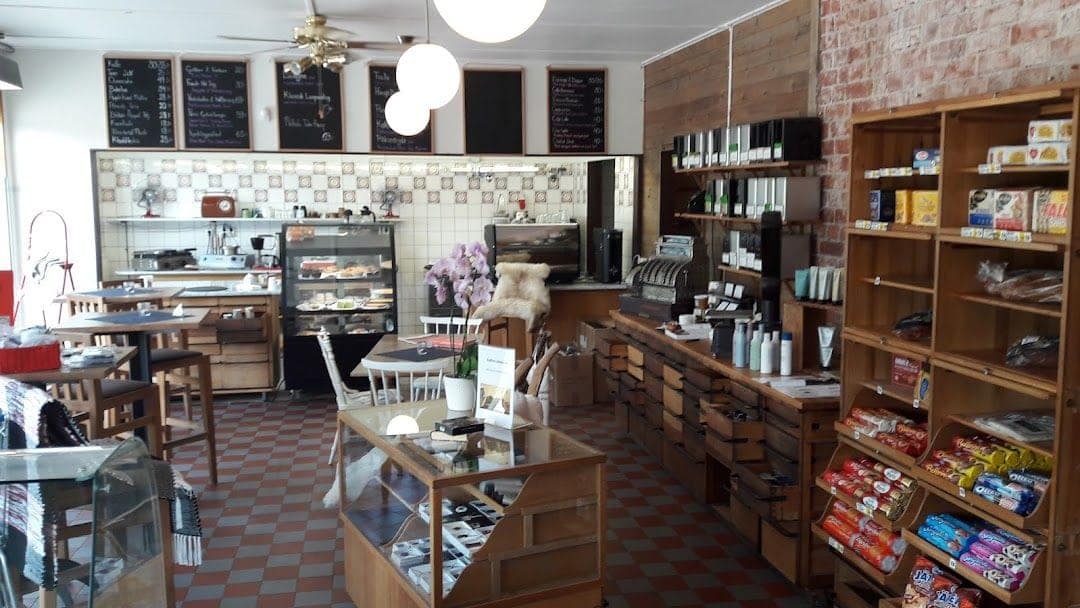
On your way back, you can visit Dalfors Lanthandel and enjoy barista coffee. Let’s surprise you with nice locally made souvenirs you won’t expect.
