

It is the perfect weather for it: -15 °C, snow slowly falling down, nothing but winter whites and greys outside. As soon as my friend Lotje and I step through the door of the little bakery in our village, we are in another world. The smell of fresh baked bread and pastries surrounds us. The yellow light from lamps and candles is very welcoming. It was time to test one of our new activities that shows why the countryside is so special and experience it with all your senses. This one we organise together with baker Kärsti at her Snitths Hantverksbageriet: baking kanelbullar (cinnamon buns) in a real bakery in the countryside. The idea made us all happy and smiling.
Why kanelbullar? Because we can’t think of a more Swedish pastry than kanelbullar. The funny thing is most Swedish (our baker too) don’t realise that people all over the world associate kanelbullar as typically Swedish, they are familiar. But there are not many Swedish who have ever baked them in a real bakery right? And it’s not that easy peasy to have them look professionally.
We start by putting on an apron and a baker’s cap. Of course, we do not want to find any hairs in the baking. We didn’t bring sandals, but baker Kärsti has some spare ones. She shows us around and shows us a picture of her grandfather who used to run a bakery/patisserie at the same spot during the 40s/50s. She lights the fire in the lunchroom, and we move on into the bakery’s kitchen where we take our place behind two workbenches. The ingredients for the filling of the buns are ready. Today we choose from cinnamon, vanilla or cardamom flavour. I prefer cinnamon, and after we have received the recipe (available in Swedish, English and Dutch), we get to work.
Outside it’s getting dark, and snow is falling more heavily now. How exciting to work with real bakery tools like big rolling pins and a flour sieve. Much easier than baking at home. Kärsti divides the dough, which she has already prepared since it takes a couple of hours before you can work with it. But she explains how to make it and gives tips and tricks to do it at home. Then we start to use those wonderful rolling pins and make slices for about 50 buns altogether.
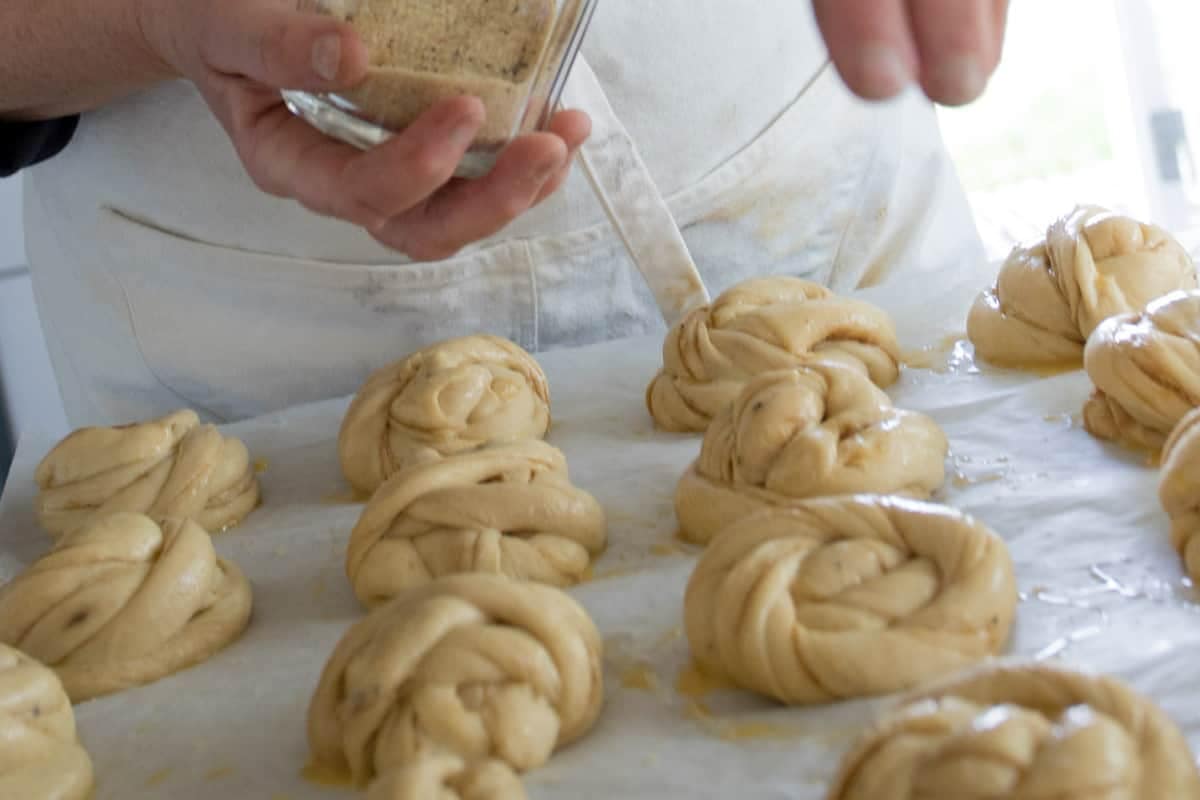
We weigh them again on the scale (will I finally bake buns of equal size?), roll them up and make them ready to rise again. And yes, now I know how to make a nice knot. In between making buns and rise we do the dishes and taste some knäckebröd Kärsti baked. She learns us more about an extra topping and drink tea, laugh and chats (well, that’s what we do during the whole workshop). When the buns have risen sufficiently, we sprinkle different types of toppings on them. It’s hard to choose which tastes best, so we use several. We brush an egg mixture over them and wait it out when they go into the oven. The result is a feast for the eyes. And the smell is the best ever!
We learned a lot, although we are already real baking lovers. To work there in that bakery feels fantastic. That Kärsti bakes ecological is also good to know. With a paper bag filled with buns and a warm feeling inside, we went home through the snow and darkness. As we hoped, we had a real experience on the countryside.
If you like this activity but are not very into kanelbullar, you can choose to bake knäckebröd: also incredibly tasty and typically Swedish. You will work with different ingredients and tastes and learn to make your knäckebröd crispy.